The global aviation industry is undergoing a structural transition, one in which the traditional boundary between luxury and necessity is rapidly dissolving. For decades, private aviation sat firmly in the realm of the ultra-wealthy or the occasional special-use traveler. Today, however, a growing segment of flyers is turning to private aviation for a far more pragmatic reason: reliability.Commercial airlines, built around a hub-and-spoke model optimized for scale rather than resilience, are showing increasing signs of strain. Persistent operational disruptions, staffing constraints, air traffic congestion and infrastructure bottlenecks have collectively transformed routine air travel into a recurring exercise in risk management. For business travelers, founders, executives and operational teams operating on compressed timelines, that uncertainty has become untenable.
According to the U.S. Department of Transportation’s Air Travel Consumer Report, major U.S. airlines recorded more than 3,200 flight cancellations in a single month. Even when flights are not canceled outright, reliability remains a coin flip. Roughly one in five commercial flights fail to arrive on time, meaning nearly 21 percent of departures miss their scheduled arrival windows. For travelers managing tight corporate calendars, missed connections and multi-city itineraries, these statistics represent a systemic breakdown rather than isolated incidents.
The downstream costs of delays, such as lost billable hours, disrupted supply chains, missed meetings and reputational impact, often outweigh the perceived cost gap between commercial and private travel. Increasingly, private aviation is being evaluated not as a discretionary upgrade but as a form of logistical insurance.
At the same time, the flexibility inherent in private aviation’s point-to-point operating model is gaining renewed relevance. Unlike commercial carriers constrained by congested hubs, gate availability and fixed schedules, private operators can access more than 5,000 public-use airports across the United States. This decentralized infrastructure allows travelers to bypass many of the systemic chokepoints that drive commercial delays.
In October 2025 alone, “National Aviation System Delays,” a category encompassing air traffic control constraints and congestion, accounted for more than 6 percent of all commercial delays. By utilizing secondary and regional airports, private aviation operators can often route around these disruptions entirely. This shift toward underutilized regional airfields is improving reliability and quietly reshaping how people think about regional air mobility.
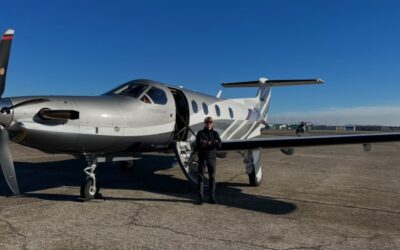
Companies like Flyte are operating at the center of this evolution. Rather than treating private aviation as a static luxury product, Flyte has focused on building a scalable, high-utilization regional air mobility platform, one designed to serve travelers who prioritize schedule integrity above all other factors. The goal is not excess, but precision by moving people efficiently between cities that commercial airlines underserve or connect poorly.
Passenger dissatisfaction with the commercial experience further reinforces this migration. The Transportation Security Administration received more than 11,700 traveler complaints in a single reporting month, highlighting widespread frustration with security bottlenecks, customer service breakdowns and inconsistent handling of personal property. Commercial carriers mishandled over 150,000 bags during the same period, while incidents involving lost or damaged mobility equipment of nearly one wheelchair or scooter per 100 passengers underscore the operational friction embedded in mass-market travel.
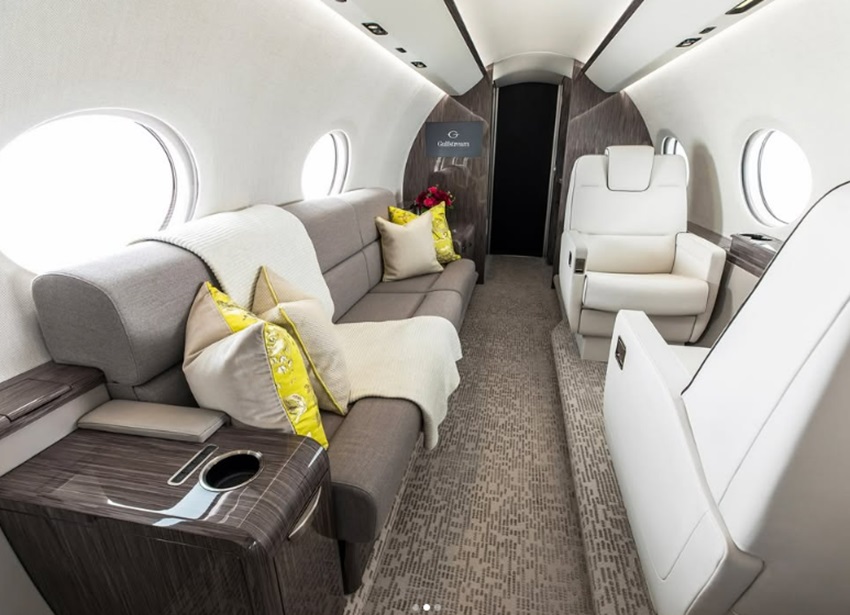
Private aviation, by contrast, operates as a closed-loop system. Passengers fly with the same aircraft, crew and baggage from origin to destination, dramatically reducing the risk of loss or delay. For small to medium enterprises, specialized project teams and time-sensitive travelers, this reliability is increasingly viewed as an essential need.
As 2026 continues, the private aviation surge is no longer driven solely by comfort or exclusivity. It is being powered by a widening reliability gap, one that commercial airlines have struggled to close. In this new landscape, regional air mobility is emerging as a practical solution to systemic inefficiencies, offering travelers a more predictable, flexible and resilient way to fly.
What was once considered a luxury is quickly becoming an operational necessity, and the market is responding accordingly.Marc Sellouk is the Founder, Chairman and CEO of Flyte, a private jet charter platform serving North America and the Caribbean. An experienced entrepreneur and pilot, he founded Transbeam as a college student, scaling it into a multi-million-dollar organization before a successful exit in 2017.






Recent Comments