
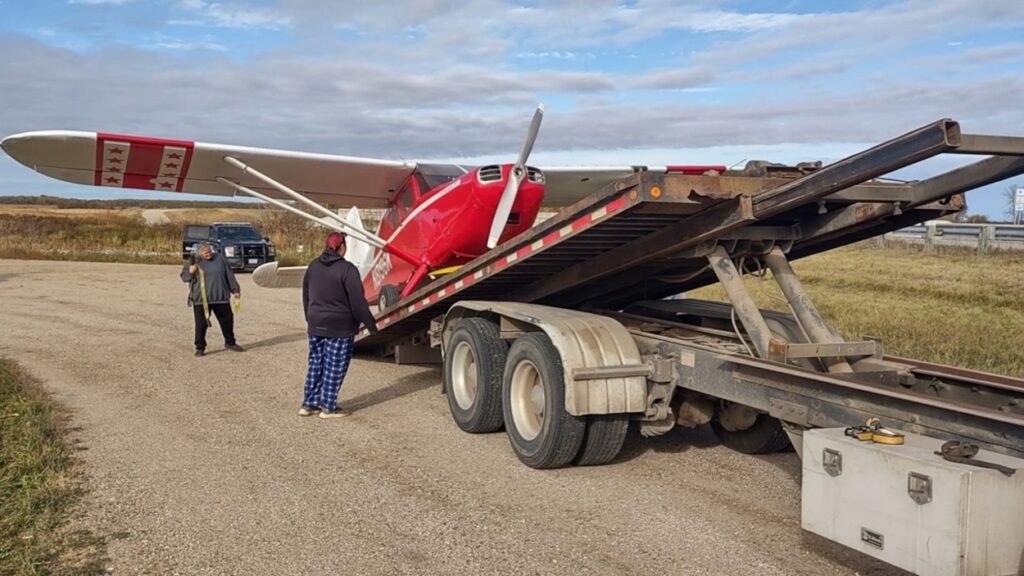
Airspace over a Native Indian Reservation is technically governed by the FAA. But a recent incident placed a spotlight on a gray area when a pilot made a forced emergency landing and had his aircraft seized. The risks involved in navigating over a tribal nation should give pilots pause. Initial incident A 1946 Stinson 108 was seized at the Red Lake Indian Reservation in Minnesota on Oct. 15 2025. It was seized from the pilot, Darrin Smedsmo, by the Red Lake Band of the Chippewa Indians after an engine failure forced him to make a landing on the highway. The tribe had passed an air ban in 1978 that prohibits any aircraft from operating at an altitude below 20,000 ft over the area and he had been flying at an altitude of 3,500 ft. The ban was made in response to Air Force plans to perform low-altitude, high-speed training flights through the reservation. Both Smedsmo and the Minnesota Pilots Association claimed that it was the first time they had heard of this ban. Trying to get the Stinson back The AOPA, Minnesota Pilots Association and other legislators worked with Smedsmo to try and get his aircraft back. The Association claimed the ban was against federal law, as the FAA previously stated that tribes have no control over airspace, but there had never been a court decision on the matter. Red Lake is a sovereign nation and governs itself mostly, only being subject to federal law. A tribal court date was set on Nov. 3, 2025, but was postponed. In January, Smedsmo received a settlement offer from the tribe wanting him to donate $5,000 to the Red Lake Nation Boys andamp; Girls Club to get his aircraft returned, as well as pay $2,750.00 for towing it to their compound, according to Midwestflyer. He declined the offer, as he may instead be owed damages. In May, the FAA threatened civil action through the U.S. Department of Justice if the tribe did not cease legal proceedings against Smedsmo and return his aircraft, according to the Minnesota Star Tribune. Red Lake chief prosecutor Ogema Neadeau sent a letter on June 1 telling the pilot that they wouldn’t pursue trespassing or related charges and would return the aircraft, stating it would be fair and equitable to do so. “As the only fully closed Indian Reservation in the United States, the Red Lake Nation takes its responsibility to exercise its sovereignty very seriously,” said Neadeau in the letter. “The decision to return Mr. Smedsmo’s airplane in this matter is the result of the Red Lake Nation’s responsible exercise of its inherent sovereignty.” Neadeau also reportedly claimed that the incident opened communication with the FAA, which was helpful in explaining the process for the reservation’s airspace concerns. Smedsmo ended up not having to pay anything to retrieve his Stinson and was able to retrieve it from the reservation on Wednesday, June 3rd. He stated that a mechanic would evaluate what went wrong when he had to perform an emergency landing in the first place. Multiple sources have stated that Smedsmo intends to revisit the reservation after the aircraft is returned to service and offer aircraft rides to children. He stated that he is relieved to close this chapter and is moving on with his life. Future updateThe Red Lake Nation has begun the process of rescinding its 1978 air ban and has updated its rules to grant written permission for air medical services and state firefighting agencies that serve the reservation. The Minnesota Pilots Association stated on Facebook that until the ban is removed and the FAA clarifies its rules on sovereign airspace; pilots should steer clear of the reservation. A warning that echoes Each sovereign nation within the U.S. is a separate entity from the others and have their own laws. The Red Lake Nation’s laws may be entirely different from those of another nation. However, until the FAA clarifies how much power these nations have over the airspace above them, pilots who operate near or in sovereign nations should minimize their time in their airspace and familiarize themselves with their aviation laws. Changing flight plans is easier than a seven-month fight to get your aircraft back.





Recent Comments