
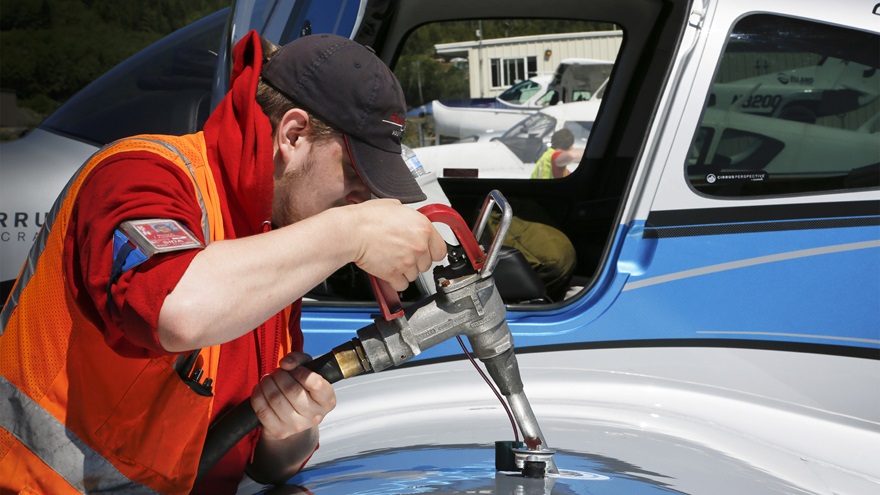
The FAA has released the draft of its plan to transition to unleaded aviation fuel.
Pilots, aircraft owners and aviation stakeholders are asked to review and provide feedback on the draft. The goal of the plan is to safely replace 100LL fuel with unleaded fuel for piston aircraft without negatively impacting the general aviation operations. These actions are part of the 2024 FAA Reauthorization Act and the Eliminate Aviation Gasoline Lead Emissions (EAGLE) initiative.
The current deadline to switch to unleaded avgas is 2030, but the FAA states that many of the factors that affect the transition are market-driven and that the deadline could be moved to a different date. It further states that decisions made by private individuals and companies could have a significant impact on the transition.
“The four-phased approach for the transition to unleaded fuels recognizes the impacts that market factors will have on the demand and supply of unleaded fuels as the FAA and industry progress on their path from fuels approvals and authorizations to the full national transition,” said the FAA in the draft.
The first phase of the transition will be to address which fuels are approved and how they compare to 100LL and each other. There are currently three candidate unleaded fuels that are in various stages. Since the market will select the fuel, the FAA will be reporting on its comparison testing to encourage informed decision-making. The second phase will be to gain experience from early market experience, which will be used when more airports and aircraft are expected to adopt unleaded fuel.
RELATED STORIES:
100LL, JetA andamp; SAF price averages down to end the year
Boeing requests exemption for 777 production from ICAO fuel efficiency rules
Million Air and Avfuel add sustainable aviation fuel to Austin airport
The third phase is when all airports outside of Alaska are expected to use the data collected in the first two phases and switch to unleaded aviation fuel. The FAA states the state will follow the same sequence of events as everywhere else in the U.S., but will have a longer transition period, which is considered the fourth phase of the plan. Alaska is expected to transition later in 2032 due to its lack of dedicated refineries and producers, as well as the fact that fuel is only delivered in the summer while aircraft alternations happen in the winter.






Recent Comments